
In a Nutshell
In an ideal world, customers would never have reason to complain about your business. In reality, most consumers who have complaints won’t even tell you about it: they’ll just never come back. In this post, we look at what makes customers complain, how complaints can lead to chargebacks, and how retailers can handle complaints and strengthen customer relationships.
Customer Complaints Are Often A Precursor to Chargebacks. But They Don’t Have to Be
It’s never pleasant to deal with disgruntled customers. Tackling customer complaints head-on, however, is far better than neglecting negative feedback altogether.
See, the thing is that customers who express their frustration to you are at least giving you a chance to make things right. Far more dangerous are angry customers who you don’t hear from at all. Chances are, those shoppers are heading straight to the bank… meaning the first time you hear from them will be in the form of a chargeback. It’s for this reason that proactive and buyer-centric customer service is so important.
Viewing customer complaints as a chance to rebuild trust and loyalty — rather than an unpleasant part of doing business — can help you improve customer lifetime value and avoid disputes. In this article, I’ll provide practical guidance for managing customer complaints so that you can stop dissatisfied customers from filing chargebacks.
Recommended reading
- Chargeback Disputes: How to Respond to Invalid Chargebacks
- Credit Card Disputes | Step-by-Step Process Guide for 2026
- Chargeback vs. Refund: Know the Difference?
- Payment Dispute Resolution: Benchmarks, Helpful Tips & More
- What Happens When You Dispute a Transaction?
- What is a Transaction Dispute? Why Do Customers File Them?
What Causes Customer Complaints?
Expectation gaps, poor communication, fulfillment or billing issues, and overly complex return policies are the most common triggers of customer complaints.
In a broad sense, customers file complaints because they’re dissatisfied. On a more granular level, several things trigger dissatisfaction:
- Expectation Gaps: Customers may complain when product or service quality is lower than what they anticipate.
- Lack of Communication: Customers feel ignored, aren’t updated, or find it hard to reach you.
- Fulfillment Issues: Late deliveries, damaged goods, or incorrect orders.
- Billing Confusion: Unrecognized charges, surprise fees, or unclear billing descriptors.
- Policy Friction: If your return policy is complex and unclear, customers may complain out of frustration
The bottom line is that complaints happen when customers feel trapped in a situation that’s outside their control and see no path to resolution. When customers lose faith that you’ll make things right, they’ll turn to their issuing banks, where they’ll file chargebacks to get back the money they feel they deserve.
Many customers won’t even consider reaching out to you in the first place. According to the 2024 Chargeback Field Report, 53% of surveyed customers admitted to disputing a transaction without attempting to contact the merchant at all.
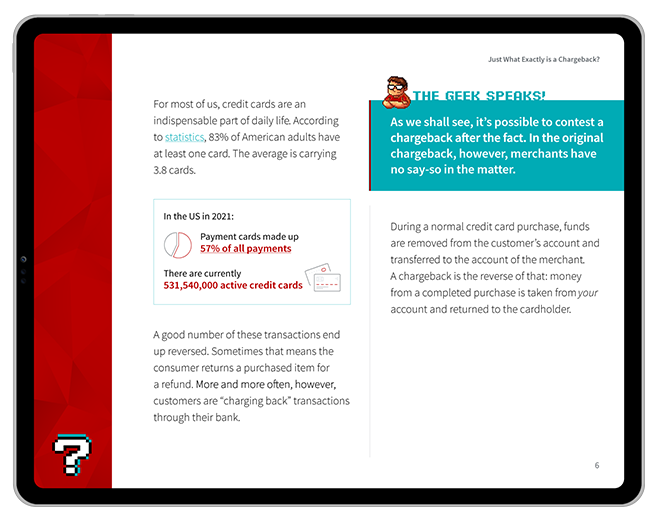

The only resource you need to become an expert on chargebacks, customer disputes, and friendly fraud.
Download the Guide
Types of Customer Complaints
There are four types of customer complaints: Productive-Constructive, Passive-Chronic, Expressive-Venting, and Aggressive-Malicious.
Every situation is different, of course, but most complaints fall into one of four general models. This is what we can refer to as the “Complaint Continuum.”
Productive-Constructive
Productive complaints that provide useful feedback by pointing out an issue, and in many cases also suggesting a potential solution.
These benefit your business by highlighting real issues in a calm, organized way. Feedback will be productive, even if it may sometimes be unnecessarily detailed.
Passive-Chronic
Chronic complaints can be issues that continue to be raised by multiple customers. In effect, it’s one complaint raised repeatedly by the same customer.
This can be tricky because many customers dislike confrontation, and may not even attempt to contact you directly, which means the issue in question may be more serious than you realized.
Expressive-Venting
Venting complaints tend to be more personal. They’re more about relieving the customer’s frustration, although at times they can also highlight real issues.
Expressive complainers can be detailed, but that may be simply because these individuals are motivated to talk, so not all issues raised may be valid. These complaints may be frustrating, but it’s better that they vent on you, rather than on social media.
Aggressive-Malicious
Aggressive complainers are expressive, too, but they’re also controlling and loud. They know you just want them to go away, and they leverage that to their advantage.
Some complaints are outright malicious, and are designed to intentionally hurt your business. An example would be posting a scathing review that misrepresents an issue, to benefit a competitor.
When it comes to friendly fraud disputes that stem from customer complaints, the revenue lost is just the start. According to LexisNexis Risk Solutions, every $1 lost to a chargeback ultimately causes $4.61 worth of damage after factoring in lost inventory, marketing spend, and chargeback fees.
The Cost of Unresolved Customer Complaints
Unresolved customer complaints result in chargebacks, negative word of mouth, and damage to your chargeback ratio.
Unresolved customer complaints can lead to unnecessary refunds — or worse, forced payment reversals in the form of chargebacks. If this happens, you could encounter a litany of immediate and longer-term consequences, including:

Direct Costs
Unresolved complaints cause you to lose revenue, incur added logistics costs, and expend labor to resolve the situation. If a complaint becomes a chargeback, you lose the sale, the merchandise shipped, and incur a non-refundable chargeback fee that can range from $20 to $100+ per dispute.
Complaints that morph into excessive chargebacks can trigger involuntary enrollment into punitive merchant monitoring programs. These impose rigorous reporting requirements and hefty fines. If you don’t fix the problem after a while, your acquirer could close your merchant account altogether.
Indirect Costs
Did you know that 61% of customers say they’d switch to a competitor after a single poor customer service experience? But, not only do you lose that customer, you’ll probably also lose customers (or potential customers) within that person’s social network.
Negative feedback spreads faster than praise. Recent survey data shows that a dissatisfied customer will inform between 9 and 15 people about their poor experience. And since 98% of consumers consult online reviews, just one publicly broadcasted complaint can deter hundreds, or even thousands of potential leads from converting into buyers. This type of reputation damage can be difficult to undo.
Resolving a customer issue directly is always cheaper than dealing with a dispute involving a bank. Proactive customer service can help you transform a potential loss into an opportunity to enhance customer lifetime value and sidestep the steep cost of chargebacks.
Customer complaints are just one factor that can lead to chargebacks.
Talk to us about a truly comprehensive strategy for risk mitigation and revenue recovery.
10 Common Customer Complaints & How to Respond
We’ve discussed how complaints can impact your business. Next, let’s look at some of the most common complaints logged by merchants, and provide suggestions for how to prevent these complaints:
“I didn’t receive my order.”
The Problem: If an order doesn’t show up when expected, it’s easy for impatient buyers to assume the worst.
The Solution: Provide reasonable delivery expectations. Supply tracking numbers, and remember to keep customers informed of back orders or unexpected delays.
“I received my order late.”
“This isn’t what I ordered.”
“My order was damaged.”
“I was overcharged.”
“I was never refunded for a return.”
“I didn’t understand your policy.”
“I canceled this subscription.”
“I can’t reach anyone in your service department.”
“I called, but your people didn’t help me.”
First-person (friendly fraud) chargebacks, whether filed innocently or maliciously, can account for between 40% and 80% of all eCommerce fraud losses
Whether they call you first or not, any of the above situations could lead a customer to call their bank and dispute a transaction. However, keep in mind that customer disputes are not always based on complete honesty.
As we said, there are only two legitimate reasons for a consumer to dispute a card transaction. That won’t stop unhappy customers from feeling justified in using misinformation to file an invalid claim. Even if they’re not aware of it, they’re committing friendly fraud, meaning you’ll wind up facing a chargeback fee.
General Tips for Customer Complaint Resolution
Use the RAPID framework to respond to customer complaints, and consider whether a refund request is legitimate or not before giving the customer their money back.
To address a customer complaint, you’ll need to resolve the issue itself and prevent the customer from later escalating the situation to a chargeback.
The RAPID framework, outlined below, can improve your shot at success:
The RAPID Resolution Framework
A simple process for handling customer complaints before they turn into chargebacks.
-
1
Respond
Engaging with the customer quickly demonstrates that their concern is a priority and stops them from contacting their bank.
-
2
Acknowledge
Validating the customer’s complaint without deflection can help you rebuild trust and protect your reputation.
-
3
Probe
Asking targeted questions can help you fully understand the “why” behind the customer’s complaint.
-
4
Implement
Presenting a solution during the customer’s first interaction can help you preserve customer lifetime value and avoid chargeback fees.
-
5
Document
Maintaining detailed records of every customer interaction gives you an evidence trail you can use to defend against potential chargebacks.
You’ll generally want to err on the side of offering refunds as a path to resolution. If the customer’s lifetime value is high, or if their complaint appears legitimate, you should probably just allow for a preemptive refund. The same goes for small-dollar purchases; it’s generally not worth the hassle to haggle over small amounts.
Then again, not all customer complaints are legitimate. Malicious customers who use false complaints as an excuse to get free items, for example, may still file disputes even if you fully resolve their supposed “complaints.”
Customers whose complaints fail to match order details, buyers whose stories keep changing, or cardholders who immediately threaten to file a chargeback if they don’t get what they want, are likewise probably acting in bad faith. For this reason, you’ll want to push back on customers who make unreasonable requests, including those who habitually ask for refunds, abuse your return process, or refuse refunds altogether.

Chargebacks can wreak havoc on your cash flow and profitability. This FREE paperback book is your guide for preventing chargebacks and, when they happen, fighting them more effectively.
Send Me My Free Paperback Book!
How to Prevent Customer Complaints
It’s cheaper to prevent complaints than to resolve them. Focus on prevention by setting accurate expectations, making it easy for customers to reach out, and simplifying steps to resolution.
If nothing else, remember this: resolving a customer complaint is cheaper than incurring a chargeback. But, preventing a customer complaint from happening is cheaper than resolving it later.
When at all possible, you’ll want to dedicate your efforts towards preventing customer complaints. Doing so can help you avoid the downstream headaches of issuing refunds or re-presenting disputed transactions. Specifically, you’ll want to:
Turning Complaints Into Chargeback Protection
Every unresolved complaint is a potential chargeback waiting to happen.
By extension, customer complaint management and chargeback management are two sides of the same coin — except in this case, there’s a silver lining, too. Thanks to the service recovery paradox, shoppers who experience a satisfying resolution after a service failure become more loyal than customers who never encountered a problem in the first place.
This is good news: it means that customer complaints aren’t inherently a threat, as long as you resolve them proactively.
As mentioned before, however, a small portion of chargeback-happy customers will lodge fake complaints for their benefit. So, you’ll nonetheless want to retain communication logs as compelling evidence to defend against potential chargebacks. Specifically, you’ll want to capture:
- Timestamped logs of all customer communications
- Photographic evidence, tracking numbers, and delivery confirmations
- The resolutions offered and the subsequent customer response
In addition to collecting evidence, analyzing aggregate complaint data can help you pinpoint and address systematic issues before they cause repeated chargebacks. Likewise, establishing a complaint resolution workflow and pairing it with early warning tools like Verifi CDRN or Ethoca Alerts can give you a final opportunity to intercept and refund escalated issues before the cardholder’s issuer initiates a chargeback.
Making the Most of Consumer Complaints
If there is any good part of receiving customer complaints, it is that it provides you with feedback that can be used to strengthen your business and help avoid chargebacks.
You’ll want to collect and analyze all the complaints you get, looking for trends and patterns. For example, is there a page on which a high number of visitors abandon their carts? If so, why? Are there a number of complaints over orders shipped with a certain carrier? Is that carrier doing anything different?
It’s also a good idea to prepare concise, informative answers to common questions. These can be helpful to both your sales representatives and your customer service agents. Once you have those answers, you can use them to create an FAQ page for customers.
Finally, consider calling yourself. Track what the customer experiences when attempting to contact your customer service line. Are there long wait times? Is your automated directory too confusing? How hard is it to reach a human rep? If filing a chargeback is easier than dealing with your company, customers will go that route.
In the end, you need to understand customer complaints and up your customer service game. This can go a long way toward helping you build customer loyalty, avoid chargebacks, and ensure your business has a bright future ahead.